Yard drainage · Richmond, VA
Yard Drainage Solutions in Richmond, VA
A yard drainage project is not one product. It is a decision about where water enters the system, what route it takes across your property, and where it is legally and physically able to leave. Richmond's clay soils make that route planning the difference between a fix and a rerun.
Symptoms that bring homeowners here
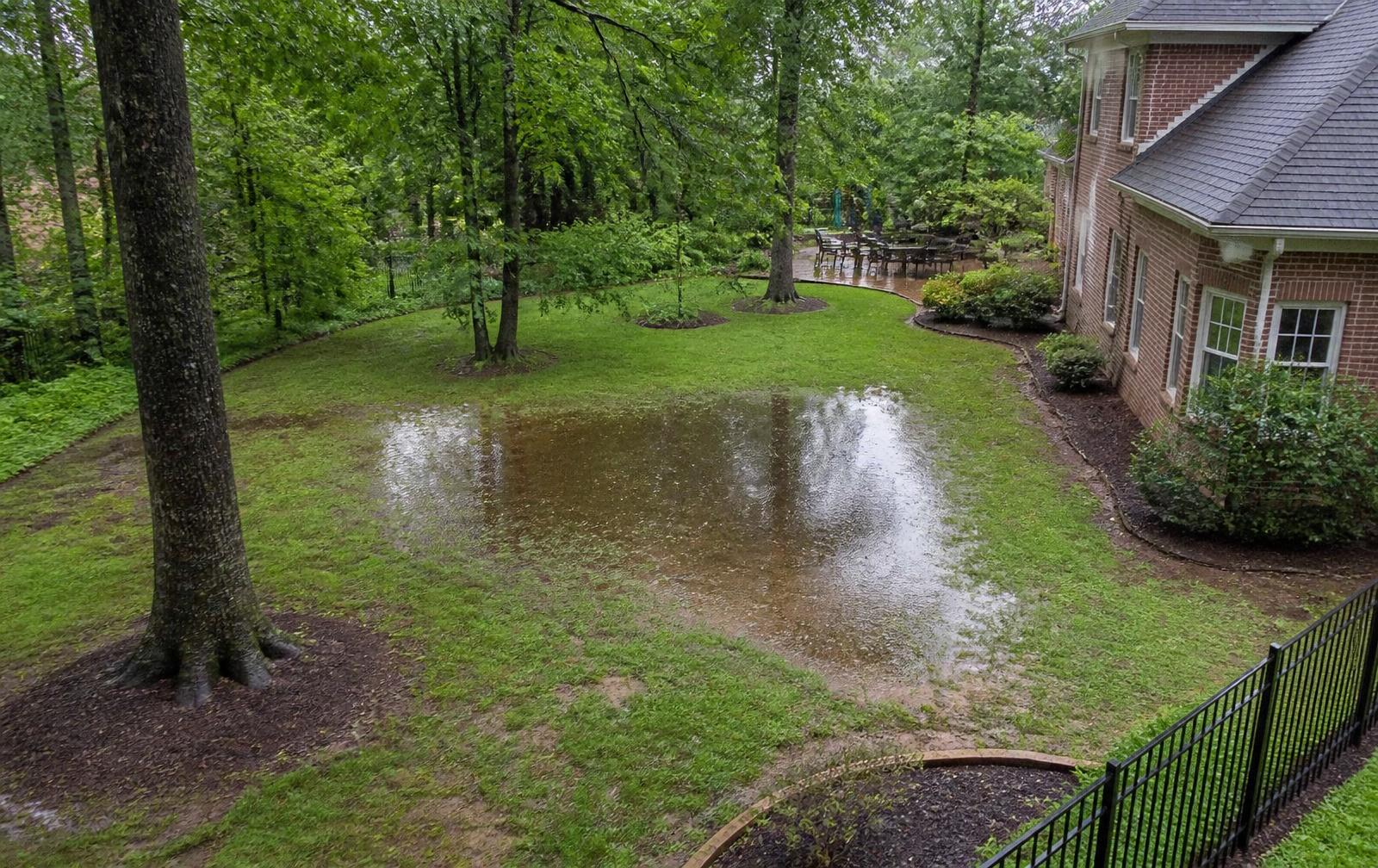
The lawn never fully dries. Mowing leaves ruts, moss creeps into shaded areas, and the same section is soft weeks after a storm.
Water shows up in the same three places. A dip mid-yard, the side yard between houses, and the strip along the patio or foundation.
Mulch and topsoil migrate. Beds wash out during heavy rain, leaving silt fans across walkways and driveways.
Neighboring water arrives. On sloped Richmond subdivisions, your yard may be receiving runoff from one or two properties uphill.
Something was installed and it stopped working. Silted pipe, a crushed line under a driveway, or an outlet buried by years of leaf litter.
The foundation edge stays damp. Usually a grade and roof-water problem before it is ever a drainage-pipe problem.
How a whole-yard plan gets built
Route first, product second
The sequence that works on Richmond lots starts at the end: find the discharge point. If a professional cannot identify where water will leave the property, nothing installed uphill of that point will hold up.
From there the route is walked backward — how much fall exists between the problem area and the outlet, whether the pipe can stay below grade the whole way, what it has to cross (driveway, walk, tree roots, irrigation), and how many collection points feed it.
Only then does the hardware get chosen: basins where water pools at a point, perforated pipe in stone where water is spread out or moving through saturated soil, solid pipe where the job is transport, and grade correction anywhere the surface is working against you.
- Collect
- Basins, French drains, downspout inlets, channel drains.
- Move
- Solid and perforated pipe, swales, corrected surface fall.
- Discharge
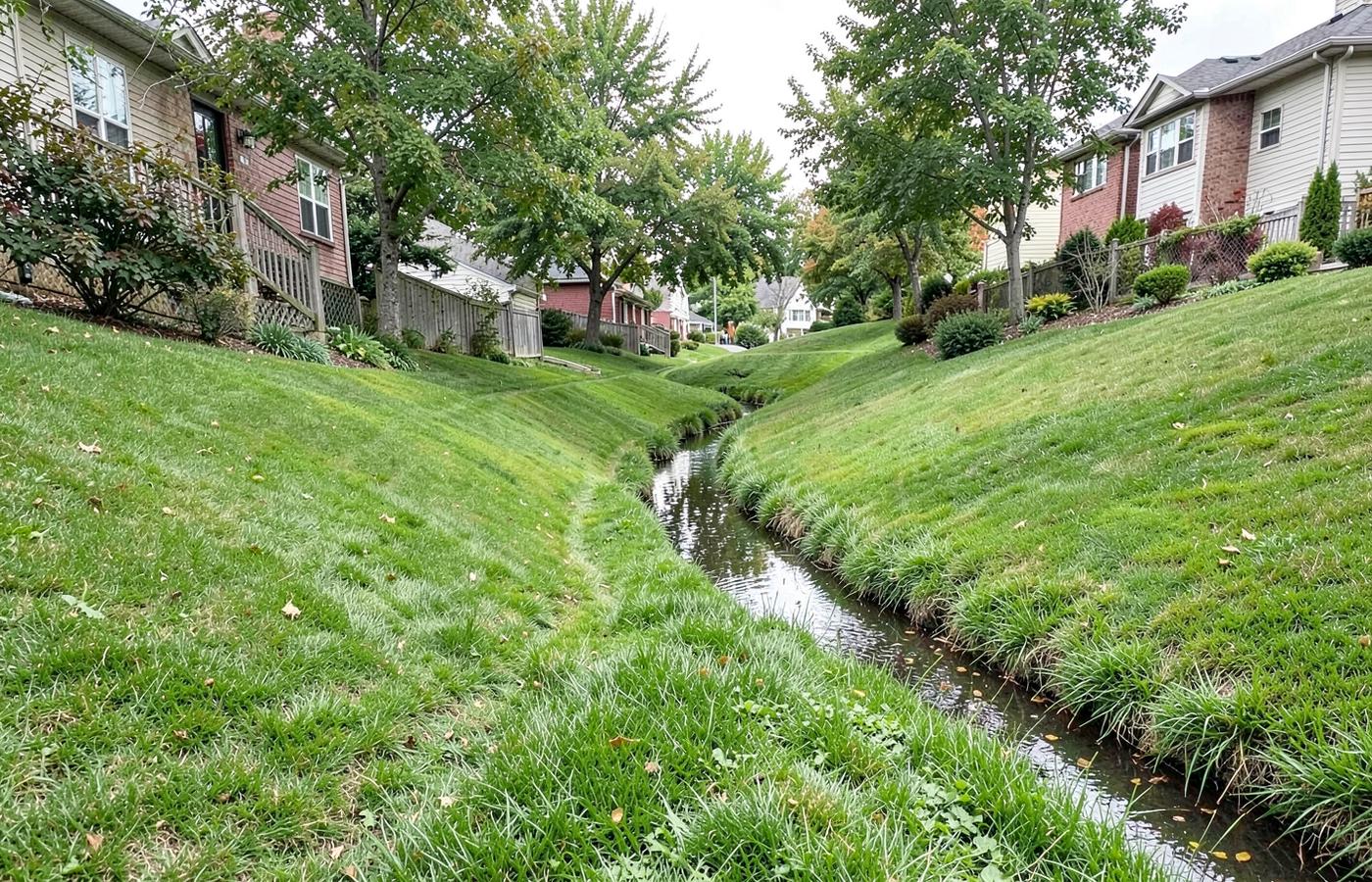
- Daylight outlet, rear low point or approved structure.
When another solution fits better
The water is only roof water
If the problem area is directly under a downspout discharge, burying that line may resolve it without a yard-wide system.
The water is only near the house
A negative grade along the foundation is a grading fix. Adding pipe to a bad grade treats the symptom.
The water is only on pavement
Driveway and apron flooding is usually a linear intake problem, not a lawn drainage problem.
Answers
Drainage Questions Richmond Homeowners Ask
How long should water take to leave a Richmond yard after rain?
Surface water on a functioning residential lot usually clears within a few hours of the rain stopping. Water still standing the next morning, or ground that stays spongy for days, indicates the yard is storing water rather than routing it.
Does a yard drainage system have to run to the street?
Not necessarily. Many Richmond-area lots discharge to a rear low point, a wooded edge, a swale between properties or an existing storm structure. The requirement is a legal, lower outlet that keeps water moving away from structures.
Will drainage work ruin my lawn?
Trenching disturbs a narrow band of turf, and grading disturbs more. Restoration is part of the project scope, and cost varies with how much finished landscaping the route crosses.
Can drainage be installed in winter?
Richmond winters rarely freeze deeply enough to stop excavation for long. Saturated clay is the bigger constraint — very wet soil is harder to work cleanly and can extend a project.
Follow the water further
- Standing Water in Your YardStart here if the symptom is water that sits.
- Catch Basin InstallationThe collection point most yard systems begin with.
- French Drain InstallationFor water spread across an area or moving through soil.
- Yard Grading & RegradingWhen the surface itself is the problem.
- Richmond Drainage Cost GuideEstimated local ranges and what moves them.
Get a Free Yard Drainage Estimate
Tell us what's happening on your property and request local drainage pricing.
No obligation. Takes less than a minute.