Richmond Metro, Virginia
Yard Drainage Solutions in Richmond, VA
Where does water go after it rains?
Roof → downspout → yard → driveway → foundation → outlet. Every drainage problem is a break somewhere along that path. Tell us where yours breaks.
Step one
What is the water doing?
Pick the behavior that matches your property. Each one points toward a different part of the water path — and a different first move.
What that usually means
Low spots plus tight clay mean water has nowhere to infiltrate. Collection points and corrected fall usually come first.
Local conditions
Why Water Stays Put Around Richmond Homes
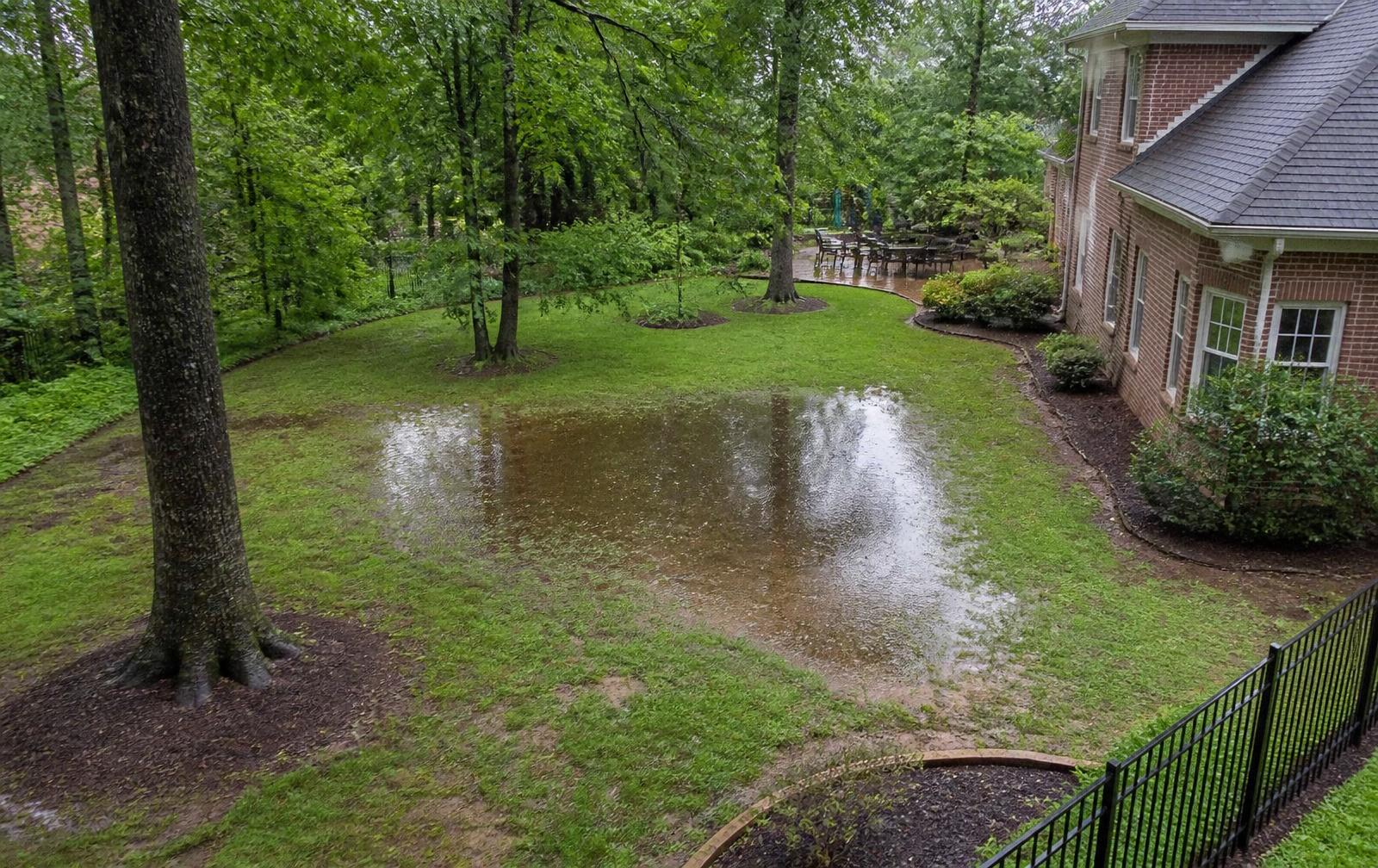
Richmond sits where the Piedmont meets the coastal plain, and much of the metro's residential soil is clay-heavy and slow to accept water. Rain that would soak away in an hour elsewhere sits on the surface here.
Construction compaction makes it worse. On newer Chesterfield and Henrico subdivisions, the topsoil layer is thin and the subsoil beneath it has been driven over repeatedly, so the first few inches saturate and everything after that runs off.
Then add the built environment: roof planes concentrating rain into two or three downspouts, driveways shedding water toward a garage, wooded lots with gentle grade changes, and neighboring properties sending flow downhill onto yours. Standing water is almost always the last symptom of an upstream routing problem.
The five failure points
- 01GradeGround falls toward the house instead of away from it.
- 02VolumeRoof water released within a few feet of the foundation.
- 03StorageA low spot with no outlet holds every inch that lands in it.
- 04SpeedHard surfaces deliver runoff faster than soil can take it.
- 05ExitThere is no discharge point, so any system backs up.
Solution paths
Problem in, approach out
Most Richmond properties need two of these working together, not one of them working alone.
The method
Collect → Move → Discharge
Every working drainage system does the same three things in order. When a system fails on a Richmond property, one of the three is missing.
01 Collect
Catch the water where it gathers
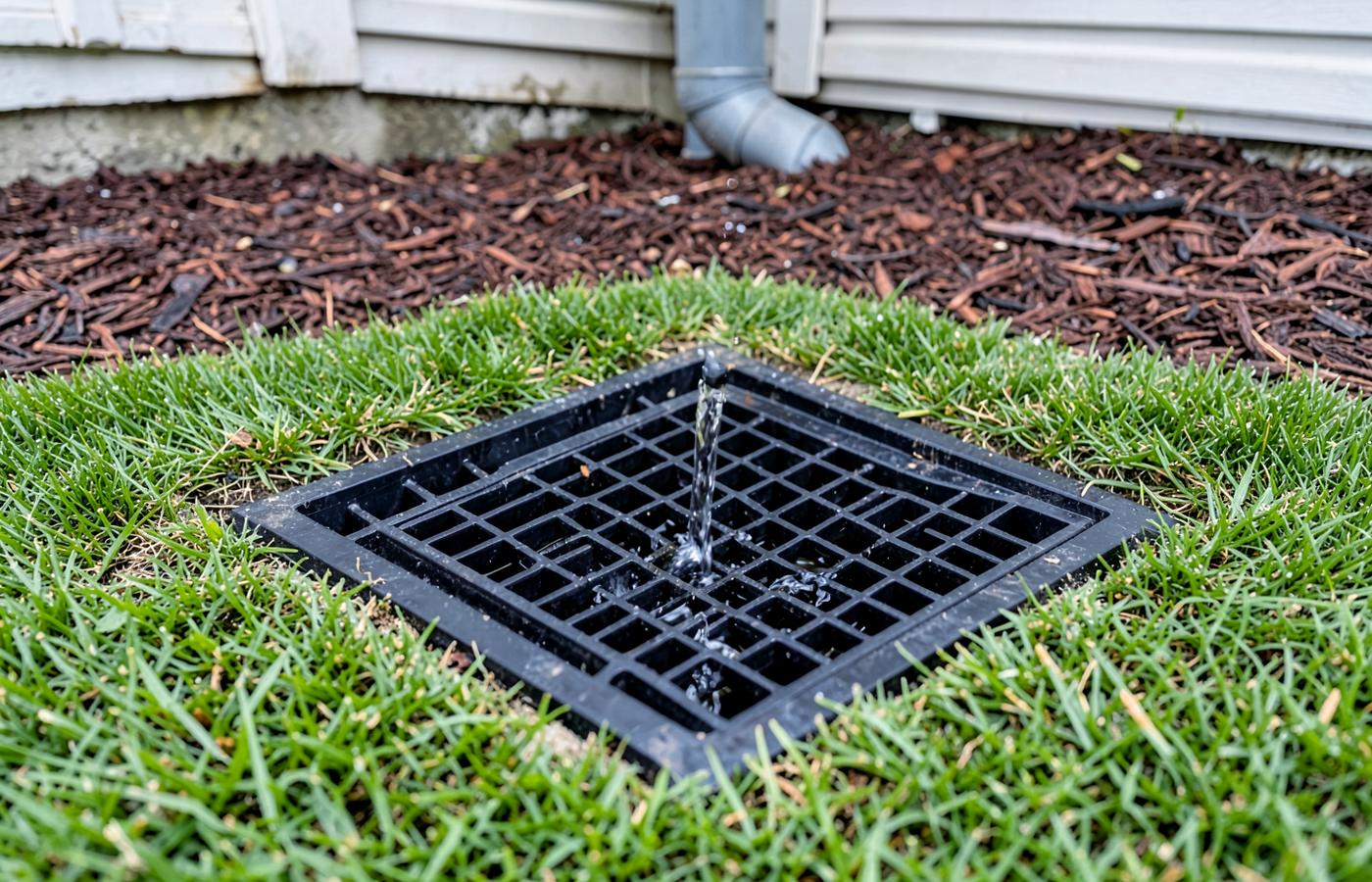
Catch basins, French drains, channel drains and buried downspout inlets pick up water at the point it is causing a problem.
02 Move
Give it a path with continuous fall
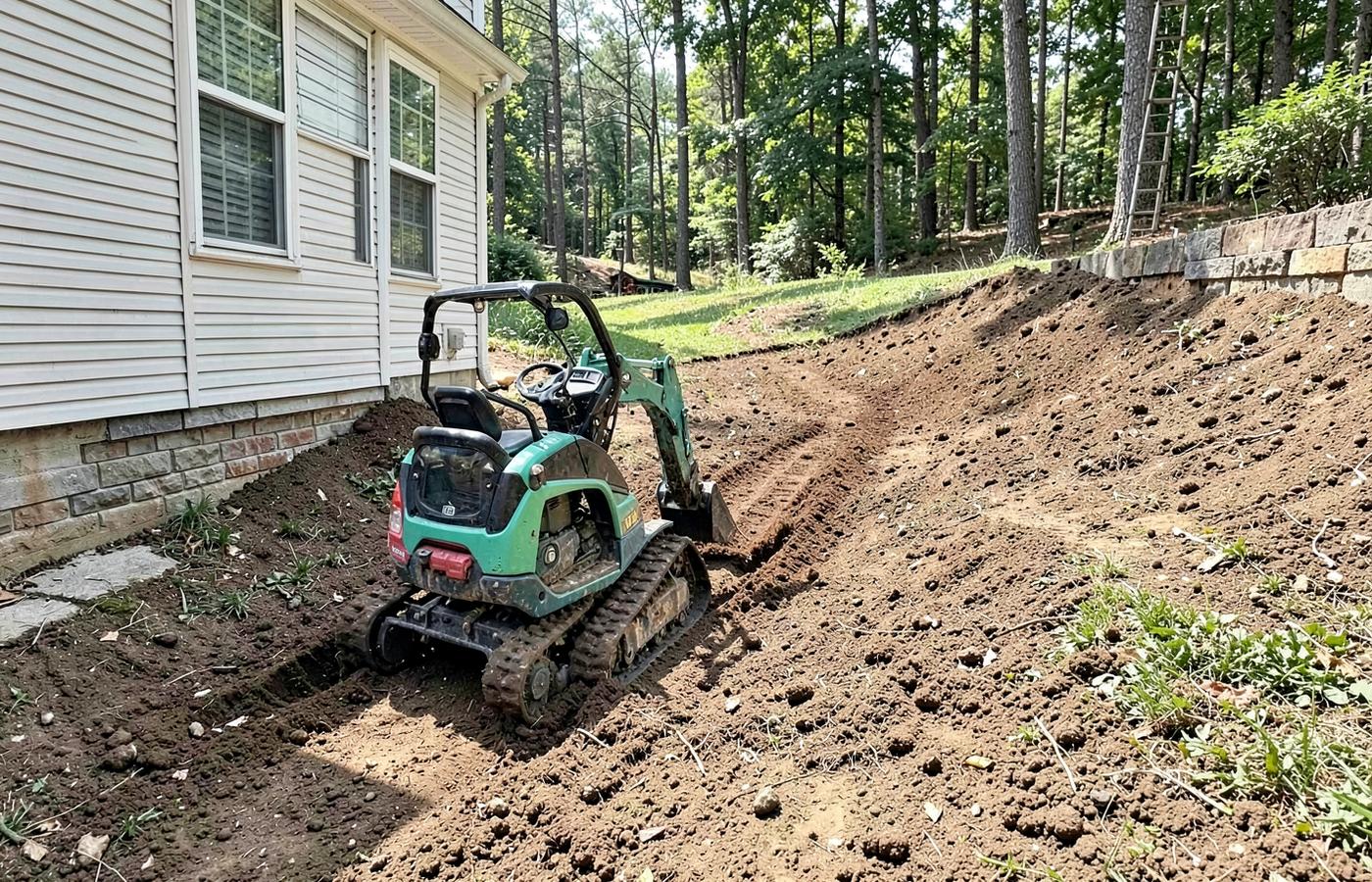
Solid or perforated pipe, swales and corrected grade carry water away. On flat Richmond lots, holding fall over long runs is the hard part.
03 Discharge
Release it somewhere it can leave
A daylight outlet on a downslope, a rear property low point or an approved discharge location. Water has to leave, not just move next door.
Coverage
Across Richmond Metro
From tight infill lots inside the city to acreage west of the metro, drainage behaves differently in each community — and the right fix follows the terrain.
Budget
What Does Yard Drainage Cost in Richmond?
Ranges below are estimates for the Richmond market, not quotes. Real pricing follows linear footage, excavation, soil, slope, access and how far water has to travel to a usable discharge point.
View Richmond Drainage Cost Guide| Drainage work | Estimated Richmond range |
|---|---|
| Residential yard drainage system | $1,500 – $5,000+ |
| French drain | $2,000 – $6,000+ |
| Surface drain network | $1,000 – $3,000+ |
| Catch basin | $1,000 – $3,000+ |
| Channel / trench drain | $1,500 – $3,500+ |
How project matching works
Tell us what the water is doing
Two short steps describe the behavior, not the jargon.
Add your project details
Location, access and a description of the problem area.
Your request can be reviewed by a local drainage professional
Qualified project requests may be shared with an independent professional serving your area.
Answers
Drainage Questions Richmond Homeowners Ask
Why does water stand in Richmond yards?
Much of the Richmond area sits on clay-heavy soil that absorbs water slowly. Add construction compaction, a shallow low spot and roof runoff released beside the house, and rainfall has nowhere to go but sideways and down — so it sits until it evaporates.
Do clay soils cause drainage problems?
Clay does not cause the problem by itself, but it removes the margin for error. On sandy soil a small dip drains overnight; on tight Piedmont clay the same dip holds water for days, which is why grade correction and engineered collection points matter more here.
French drain or catch basin — which is better?
They solve different halves of the problem. A catch basin removes surface water gathering at a defined low point. A French drain intercepts water spread across an area or moving through saturated soil. Many Richmond yards use both on the same pipe run.
Can grading solve standing water?
Often, yes — especially near foundations and along side yards. If there is somewhere for water to go and enough fall to get it there, regrading can be a durable fix without any pipe. Where fall is limited, grading is paired with a collection system.
Can downspouts be buried underground?
Yes. Solid pipe carries roof water from the downspout to a discharge point away from the house. This is one of the highest-impact changes on many Richmond lots because a single roof plane can release thousands of gallons within a few feet of the foundation.
How can driveway flooding be reduced?
By intercepting flow before it reaches the low end. A channel drain set across the flow line, combined with grading at the apron and a piped outlet, keeps sheet flow from collecting at a garage or turnaround.
What is a drainage swale?
A shallow, gently shaped channel — usually grassed — that carries surface water along a planned route instead of letting it wander. Swales are common between neighboring Richmond-area properties where water naturally travels downhill.
How much does yard drainage cost in Richmond?
Most residential yard drainage projects in the Richmond market fall roughly between $1,500 and $5,000+, with French drains commonly $2,000 to $6,000+. These are estimates only; linear footage, soil, slope, access and discharge distance drive real pricing.
Get a Free Yard Drainage Estimate
Tell us what's happening on your property and request local drainage pricing.
No obligation. Takes less than a minute.