Service area · Chesterfield County
Yard Drainage Solutions in Chesterfield, VA
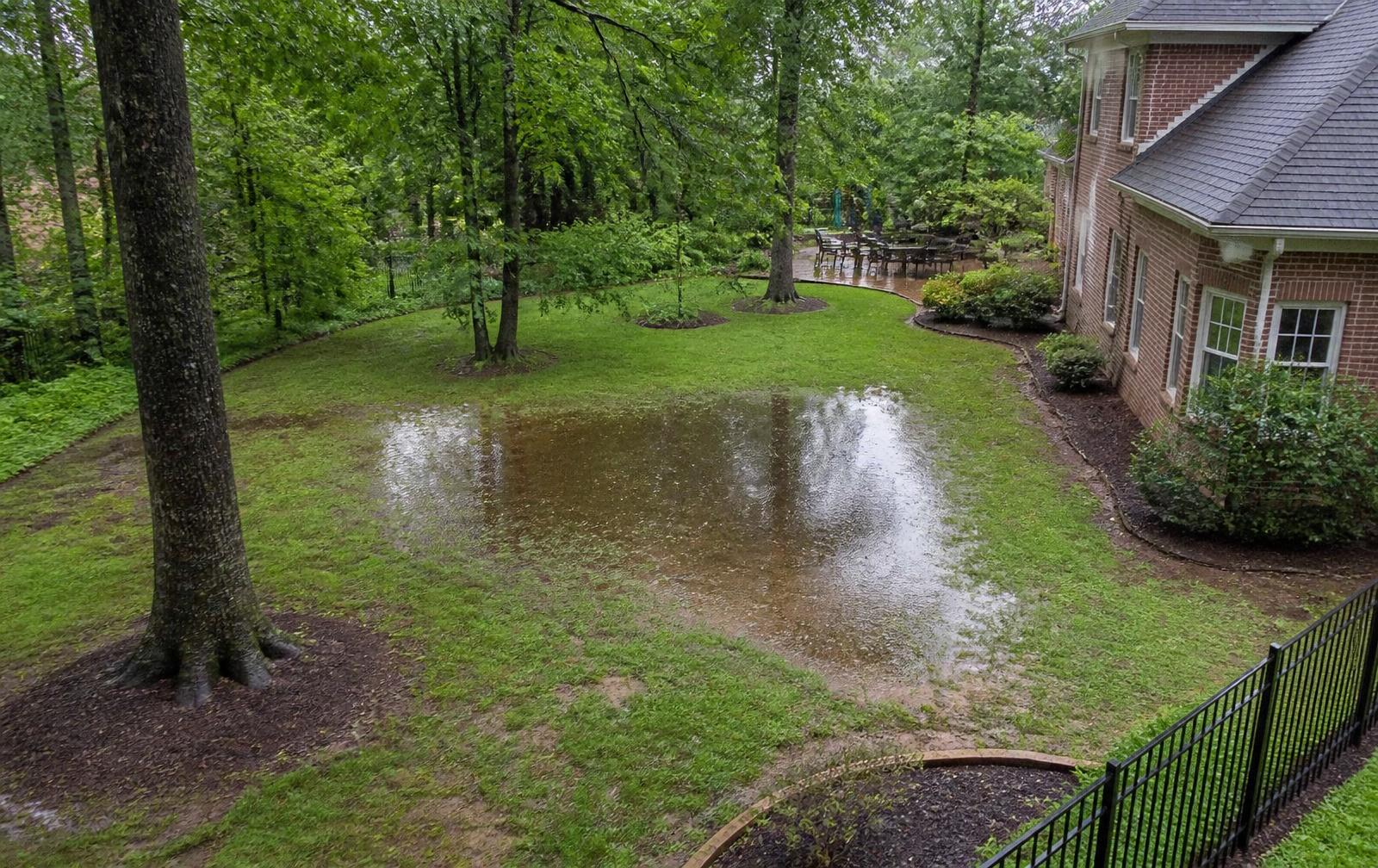
Chesterfield is where Richmond's clay reputation is earned. Between compacted construction subsoil, broad flat rear yards and large roof areas, the county produces the classic version of the problem: a yard that looks fine until it rains, then holds water for days.
Why it happens here
Compaction is the quiet culprit
Undisturbed clay drains poorly. Clay that has been driven over by loaders and delivery trucks for six months drains close to not at all. What remains on top is a few inches of imported topsoil and sod, which saturates in the first twenty minutes of a real storm.
Add a large roof discharging through three or four downspouts, a rear yard graded nearly level for usability, and neighboring lots draining toward a shared rear line, and standing water is the predictable outcome rather than an anomaly.
Solutions here are usually layered: remove the roof volume, then collect what remains at the true low point, then correct the surface so water reaches that point instead of stalling halfway.
Neighborhood conditions across the county
Newer subdivisions
Flat rear yards, compacted subsoil, large roof footprints, shared rear drainage routes.
Established sections
Mature trees, settled grades, aging or absent downspout piping, leaf-loaded low spots.
Sloped and wooded lots
Runoff arriving from uphill, walkout basements, erosion channels forming at the wood line.
Answers
Chesterfield drainage questions
Why is Chesterfield County soil so hard on drainage?
Much of the county sits on dense clay with a thin worked topsoil layer. Once that layer saturates — which happens fast during a Virginia downpour — additional rain has nowhere to go but across the surface toward the nearest low point.
My yard is new construction and already holds water. Is that normal?
It is common. Heavy equipment compacts subsoil during construction, finish grading is done for appearance and quick sheet flow rather than long-term routing, and the roof is often larger than what the surrounding ground can absorb.
Should I wait to see if a new lawn settles before fixing drainage?
Persistent standing water rarely improves on its own. Turf roots do not deepen in saturated clay, and each wet cycle further compacts the soil. Establishing a route now protects both the lawn and the foundation.
Can drainage work be coordinated with a patio or landscape project?
It should be. Drainage installed before hardscape costs less and works better than drainage retrofitted around a finished patio, and grade decisions are far easier to make while the ground is still open.
Get a Free Yard Drainage Estimate
Tell us what's happening on your property and request local drainage pricing.
No obligation. Takes less than a minute.